
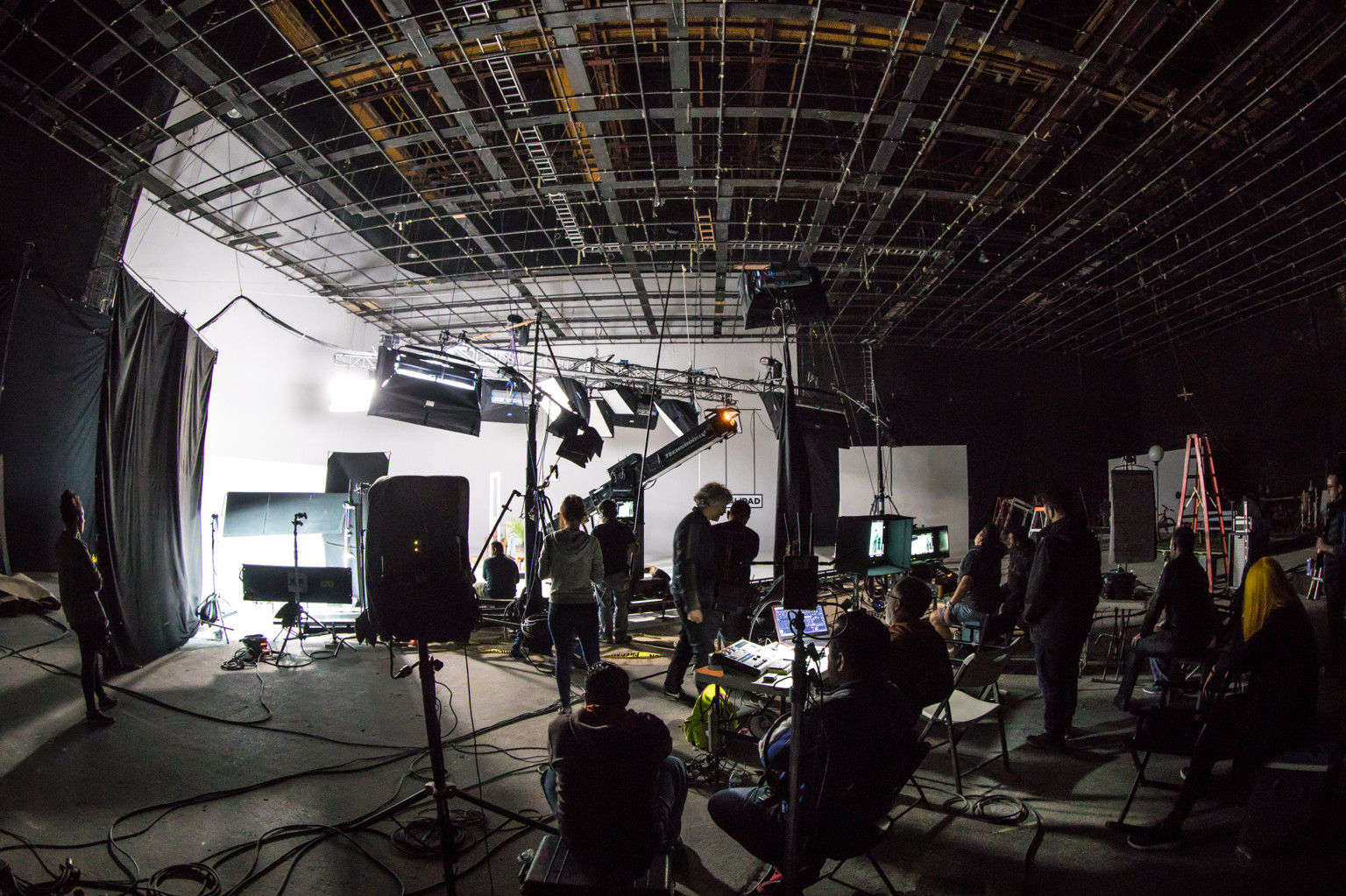
What is a Production Designer?

- What is the role of a production designer in film production?

- How to become a production designer
- Famous production designers
The production designer controls and influences the overall look of a motion picture or series in film and television. Though viewers might not pay attention to production design credits or awards, the role is integral to the filmmaking process. As a filmmaker, you’ll value a skilled production designer who’s able to bring the visual elements of your film to life. What does a production designer do, how do you become one, and which famous films feature some of the best production design? Let us break it down for you!
Storyboard software for video agencies & brand teams
One workspace for storyboards, animatics, comments, and approvals. Spend time on the creative, not the back-and-forth.

What is the role of a production designer in film production?
The production designer works with the director and cinematographer to create the visual film design for a motion picture. In collaboration with the other visual departments, such as costume design, lighting, visual effects and special effects, and graphic design, they define the visual storytelling.
For Hollywood feature films, for example, a production designer’s work spans the phases of pre-production, principal photography, and post-production. Beginning with the script, the production designer does a lot of research, for example, on the time and location in which the film is set. The production designer’s sketches, mood boards, and the development of atmosphere, lighting, composition, color, and texture inform the art director’s work.
A lot of the work is preparatory to avoid major issues during production, but while the principal photography is taking place, the production designer manages the creatives and crew of the visual departments. It’s their job to fix problems around visual elements. During post-production, the production designer can oversee added visual effects to ensure they adhere to the defined overall look.
The role of production designer requires a healthy dose of creativity and the ability to visualize a script or project, expertise in art and design, a technical understanding of motion picture photography, as well as skills for organization, communication, and management.
The role within the art department
The production designer works as head of the art department and is therefore responsible for hiring and managing the entire team. Their tasks include setting and overseeing the daily work schedule for the art department crew and maintaining the budget. The art department is often the largest department of a film production, as it comprises many production jobs and crew members around visual elements and visual effects:
- set designers, set decorators and builders
- graphic design artists
- propmasters and makers
- costume designers and supervisors of wardrobe and make-up
- special effects and visual effects supervisors
Depending on the size of the production, each of these can have their own art director, or there is one individual to oversee the entire art direction. The production designer works with the art director to handle the logistics and administration of the visual film design.
Production Design as part of the film production process
The most important phase for a production designer is pre-production when they work with the director and production designer on the visual film design to decide on the overall look of a film.
- Film design: The production designer discusses the script with the director and the cinematographer to develop the vision for the film. The director might have only rough ideas, or bring a detailed brief for the production designer and make many decisions for them, so they need to stay flexible. The production design process will produce mood boards and other material to determine the motion picture’s style. This will influence film sets, location shoots, visual themes, CGI, visual effects, sound design, prop master and models, stunts, and many other aspects.
- Budget: The Production designer has to confer with the Executive Producer or the film’s producers to find solutions that fit the budget. This will largely determine the size of the art department as well: the bigger the budget, the more production design help they can enlist, of course.
- Research: The visual elements of a film depend on the time period and setting. The production designer may have to create a whole alien world or go back in time to a definitive historical period. They’ll consult reliable resources and authentic sources, study art books and other films, and develop mood boards and lookbooks.
- Production design: At this stage, the production designer will further translate the vision for the film design into sketches, models, and instructions that communicate the visual aspects and visual elements so the art department crew members can do their jobs.
- Art department management: The production designer will then hire the art department film crew, often making use of industry connections to secure talent and professionals in line with the director’s vision to achieve the desired overall look.
The job of the production designer during principal photography and general production is to oversee the art department. They’re typically on location to work out any problems, but part of their thorough pre-production work is to prevent any of these issues. They will communicate with the art director to ensure the day-to-day logistics such as monitoring shots, set construction and dressing run smoothly.
The workload of the production designer lessens as the shooting wraps up, and they often begin pre-production work on their next project then. But many visual elements and visual effects only come in during post-production, so they will influence CGI, effects, and coloring as well.
How to become a production designer
From New York City to Los Angeles, any experience on the film set of a motion picture can benefit you when you want to become a production designer. The greatest in film design will significantly influence the look of a film when they work on a project. But how do you get started in production design?
Production designer education
A classic New York film school education will teach you the required vocabulary, basic experience, and skills to become a production designer. Many film schools offer specialized production design courses or degrees, sometimes calling production designers scenic designers, set designers, or visual directors. The University of California in Los Angeles, Chapman University in California, the University of Southern California, New York University, and the AFI Conservatory in Los Angeles all have programs for aspiring production designers.
A degree in architecture or interior design is also beneficial, especially when you have an interest in set design and construction and want to be involved in productions that require large-scale sets. Rotating through various art department jobs on film sets or working for an amount of time with an art director or production design mentor, as a personal assistant, for example, will also allow you to gather valuable knowledge and insight.
The learning never stops, and with the importance of post-production for films rich in special effects, some production designers specialize in CGI and digital visual effects to take on a larger role than usual in filmmaking post-production. Others have a more theoretical education as art history majors or students of cinema and then gather practical experience with lower-level film set jobs.
Career as a production designer
A film school education is often the foundation of a career in production design. Most students will work on short films and other projects while in school to gather experience. Depending on your likes and talents, you might discover your specialty or interest during one of these projects.
Opportunities such as interning at a production company and personal assistant on a production or film set will give you further industry experience on the way to becoming a production designer, all the while building your relationships with professionals.
Look online for entry-level jobs and use every opportunity to network with art directors, set designers, and production designers to identify and seize that next opportunity. Jobs preceding the position of production designer are commonly set dresser or set designer, and art director. Once you've found work as a production designer, you'll continue to grow with the projects, and by building up your expertise.
Production designer salary
Production designers can work in union and non-union jobs with varying salaries. The amount of work on a project and the respective remuneration for work hours depends on film, TV show, music video, or commercial video. Typical daily rates range from $400 to around $2,000, with an estimated annual salary of $60,000 to $70,000. As a freelance production designer, you’ll set your own rate, according to skills, experience, and ability to negotiate.
Union jobs typically have rates with a standardized base and a bonus per project which you’ll have to negotiate yourself. The Art Directors Guild lists their rates as sums per week, for example, $2,000 when working on a certain show. Big Hollywood productions might have a weekly rate of $8,000 to $10,000, but according to the Art Directors Guild, the average ranges from $4,000 to $7,000 per week for production designers and art directors.
Valuable skills & experience in film production design
Any production designer requires a well-rounded understanding of the art department. Visual storytelling is one thing, but managing a large crew and a small budget is crucial as well. The following skills are required of a great production designer:
- Film design: The production designer must be able to take the script and the director’s vision and brief to create coherent visuals. Design skills, technical drawing skills, visual language, art history, film history, color theory, cultural references, technical understanding of cinematography and camera angles, as well as construction and production will all be useful.
- Knowledge: The ability to read blueprints and technical drawings and also create them is certainly beneficial. A good production designer can sketch quickly by hand but also knows how to use software for digital illustration and design. Some specialize in certain time periods for work on historical dramas, but the requirements change with each project. No one can know everything, but a production designer knows how to research and whom to ask for in-depth knowledge.
- Management: No production designer can do everything by themselves, so they must delegate and manage not only time and money but also people. Being a good team leader allows a production designer to run a smooth and effective production while keeping their crew content. While tried-and-true workflows are great, they have to stay flexible and adapt to situations where necessary.
- Communication: As a leader and head of the art department, a good production designer listens and learns from the team. They know how to communicate with the director, cinematographer, and art director, and how to convey decisions diplomatically to the art department. A big ego will only get in the way, but people pleasers will also suffer on the job. A good production designer takes responsibility, recognizes and facilitates talent, and keeps counsel as needed regardless of the position of others to harness creativity.
- Organization: The production designer has to respect the schedule and budget, but knows how to stretch either when the director’s vision or the project requires it. The art director is there to help with logistics and day-to-day organization but is only second in command. The production designer doesn’t shy away from organizational minutiae because they’re also the one with the big picture in mind, knowing the relative importance of each step in the film production process.
Each movie production or project will require unique skills, and the details of a production designer’s job also change with rising and falling trends in the motion picture industry.
Storyboard software for video agencies & brand teams
One workspace for storyboards, animatics, comments, and approvals. Spend time on the creative, not the back-and-forth.
Famous production designers
Learn from the best production design examples which have won Academy Awards and Oscar nominations, from Dennis Gassner (Blade Runner 2049) to Anton Furst (The Grand Budapest Hotel) and Grant Major (The Lord of the Rings: The Return of the King). The Best Production Design Academy Award honors films with outstanding art direction. The category’s original title was Best Art Direction but was split into black-and-white and color (from 1939 to 1956 and from 1959 to 1966). Starting in 2012 with the 85th Academy Awards, the category has its current name.
Academy Awards for Best Production Design
These are the motion pictures of the last ten years which received an Oscar for their production design, going back to the year 2012 when the category name changed (see the full list).
- 2021 Patrice Vermette, Zsuzsanna Sipos - Dune
- 2020 Donald Graham Burt, Jan Pascale - Mank
- 2019 Barbara Ling and Nancy Haigh - Once Upon a Time in Hollywood
- 2018 Hannah Beachler and Jay Hart - Black Panther
- 2017 Paul Denham Austerberry, Shane Vieau and Jeff Melvin - The Shape of Water
- 2016 David Wasco and Sandy Reynolds-Wasco - La La Land
- 2015 Colin Gibson and Lisa Thompson - Mad Max: Fury Road
- 2014 Adam Stockhausen and Anna Pinnock - The Grand Budapest Hotel
- 2013 Catherine Martin and Beverley Dunn - The Great Gatsby
- 2012 Rick Carter and Jim Erickson - Lincoln
Top 10 Production Designers
These are ten notable production designers and their major film achievements, based on an IMDB ranking.
- Rick Carter: Avatar (2009), Star Wars: Episode VII - The Force Awakens (2015), Jurassic Park (1993)
- Bo Welch: Edward Scissorhands (1990), Men in Black (1997), A Little Princess (1995)
- Rick Heinrichs: Sleepy Hollow (1999), Star Wars: Episode VIII - The Last Jedi (2017), Captain America: The First Avenger (2011)
- Jess Gonchor: Hail, Caesar! (2016), No Country for Old Men (2007), Little Women (2019)
- J. Michael Riva: Iron Man (2008), Django Unchained (2012), The Color Purple (1985)
- Nathan Crowley: The Prestige (2006), The Dark Knight (2008), Interstellar (2014)
- Dante Ferretti: Sweeney Todd: The Demon Barber of Fleet Street (2007), Shutter Island (2010), Hugo (2011)
- Robert Stromberg: Avatar (2009), Master and Commander: The Far Side of the World (2003), Maleficent (2014)
- Grant Major: The Lord of the Rings: The Fellowship of the Ring (2001), King Kong (2005), The Lord of the Rings: The Return of the King (2003)
- Philip Messina: The Hunger Games: Mockingjay - Part 2 (2015), The Hunger Games: Catching Fire (2013), Mother! (2017)
Storyboard software for video agencies & brand teams
One workspace for storyboards, animatics, comments, and approvals. Spend time on the creative, not the back-and-forth.
More from the blog

Storyboard software for video agencies & brand teams
One workspace for storyboards, animatics, comments, and approvals.
Spend time on the creative, not the back-and-forth.